
Quick answer: A 5 kW on-grid rooftop solar system in Gujarat costs about ₹2.40–2.75 lakh installed with DCR panels (indicative, November 2026). The PM Surya Ghar subsidy is capped at ₹78,000, so you pay about ₹1.62–1.97 lakh. It makes around 600 units a month and suits homes using 550 units or more.
5 kW is the size bigger Gujarat homes ask about once the ACs, a second floor or an EV arrive. It’s also where most buyers make an expensive mistake: the subsidy stops growing after 3 kW, so every kW above that is paid in full. This guide gives you the full 5 kW price, the cost after subsidy, an itemised quote, savings on a real Gujarat bill, and an honest answer to whether 5 kW is worth it over 3 kW or 4 kW for your usage.
We’re ASV Energy Solutions, a solar EPC company in Koba, Gandhinagar, with 5,500+ installations. The prices below are for a properly built system, not the cheapest number on the internet.
5 kW solar system price in Gujarat at a glance
| Item | 5 kW on-grid (DCR panels) |
|---|---|
| Installed price before subsidy | ₹2,40,000 – ₹2,75,000 |
| Price per kW | ₹48,000 – ₹55,000 |
| PM Surya Ghar central subsidy | ₹78,000 (same as 3 kW) |
| Gujarat state top-up | Not available (only up to 2.18 kW) |
| Your cost after subsidy | ₹1,62,000 – ₹1,97,000 |
| Generation | About 600 units a month (7,200 a year) |
| Roof area needed | About 400–500 sq ft, shadow-free |
| Payback | About 3.2–3.9 years for a home using 600 units a month |
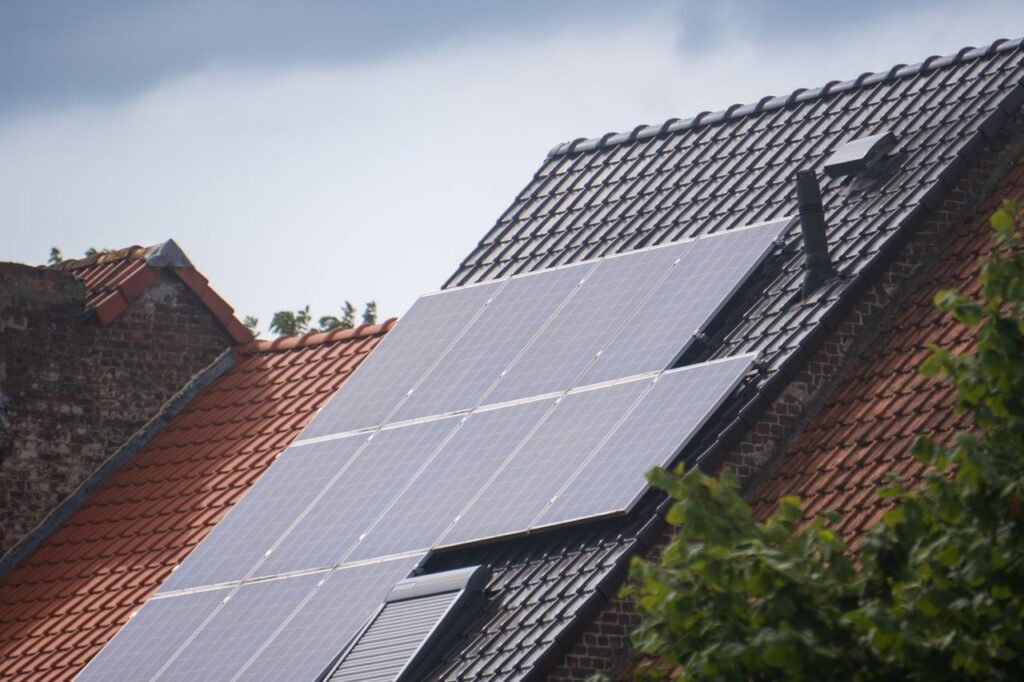
A 5 kW plant uses eight or nine DCR panels (for example 8 × 620 Wp or 9 × 580 Wp TOPCon modules) and a 5 kW on-grid inverter. Depending on your connection, we use a single-phase or three-phase inverter. Your sanctioned load should be at least 5 kW; if it’s lower, the DISCOM will ask you to raise it, and we check this before filing.
5 kW price after subsidy: why it’s still ₹78,000
Under PM Surya Ghar: Muft Bijli Yojana, the central subsidy (CFA) for homes is ₹30,000 a kW for the first 2 kW and ₹18,000 for the third kW. Above 3 kW, nothing more is added. A 5 kW home system gets ₹78,000, exactly the same as a 3 kW system.
| System size | Price before subsidy | Central subsidy | You pay |
|---|---|---|---|
| 3 kW | ₹1.50 – 1.71 lakh | ₹78,000 | ₹0.72 – 0.93 lakh |
| 4 kW | ₹1.96 – 2.24 lakh | ₹78,000 | ₹1.18 – 1.46 lakh |
| 5 kW | ₹2.40 – 2.75 lakh | ₹78,000 | ₹1.62 – 1.97 lakh |
So the 4th and 5th kW cost you about ₹90,000–1,04,000 with no subsidy on them. That’s fine if you’ll use those units yourself, and a poor deal if they mostly go to the grid. The savings section below shows where the line is. Subsidy rules, documents and timelines are in our Gujarat solar subsidy guide.
What’s inside a 5 kW quote: itemised cost
| Component | Indicative cost |
|---|---|
| DCR TOPCon panels, 5,000 Wp at about ₹27/W | ₹1,35,000 |
| 5 kW on-grid inverter | ₹45,000 |
| Mounting structure (hot-dip galvanised, elevated) | ₹40,000 |
| DC and AC cables, ACDB/DCDB, earthing, lightning arrester | ₹22,000 |
| Installation and commissioning | ₹10,000 |
| Net meter connectivity charge and paperwork | ₹3,000 |
| Total before subsidy | ₹2,55,000 |
| Less central subsidy | − ₹78,000 |
| Your cost | ₹1,77,000 |
Quotes differ most on structure and BOS (cables, earthing, protection). At 5 kW the structure carries eight or nine large panels, so the steel matters: ask for hot-dip galvanised members, the section size and thickness, and how it’s anchored to your roof. Ask every vendor to write the panel make and wattage, inverter make, structure specification and number of earth pits in the quote. Since September 2025, GST on solar panels and systems is 5%.
How much will a 5 kW system save on your bill?
In Gujarat a well-installed 5 kW plant makes about 4 units per kW a day, roughly 600 units a month or 7,200 a year. Here is the monthly benefit on a UGVCL, DGVCL, MGVCL or PGVCL home bill at different usage:
| Monthly use | Bill before solar | Bill after 5 kW | Monthly benefit |
|---|---|---|---|
| 400 units | ₹2,735 | ₹25 + ₹450 surplus credit | ₹3,160 |
| 500 units | ₹3,500 | ₹25 + ₹225 surplus credit | ₹3,700 |
| 600 units | ₹4,265 | ₹25 | ₹4,240 |
| 700 units | ₹5,030 | ₹598 | ₹4,432 |
| 800 units | ₹5,795 | ₹1,258 | ₹4,538 |
At 600 units a month the benefit is about ₹4,240 a month, or ₹50,900 a year. On a cost of ₹1.62–1.97 lakh after subsidy, that’s a payback of about 3.2–3.9 years, and the panels carry a 25-year performance warranty. Homes don’t lose anything under GERC’s new 2026 net metering rules: full set-off continues and surplus is still bought at ₹2.25 a unit. Our net metering guide for Gujarat explains the rules DISCOM by DISCOM.
5 kW vs 3 kW vs 4 kW: which size is worth it?
Because the subsidy is flat above 3 kW, the right size depends almost entirely on how many units you use. Extra capacity only pays well when you consume what it makes; units exported to the grid earn just ₹2.25.
| Monthly use | 3 kW benefit | 4 kW benefit | 5 kW benefit | Best size |
|---|---|---|---|---|
| 400 units | ₹2,490 | ₹2,890 | ₹3,160 | 3 kW |
| 500 units | ₹2,638 | ₹3,365 | ₹3,700 | 4 kW |
| 600 units | ₹2,744 | ₹3,536 | ₹4,240 | 5 kW |
| 700 units | ₹2,754 | ₹3,640 | ₹4,432 | 5 kW |
- At 400 units a month, 5 kW saves only about ₹670 a month more than 3 kW, for about ₹90,000–1,04,000 more upfront. That extra takes over 11 years to recover. Choose 3 kW (see our 3 kW solar system price guide).
- At 600 units or more, 5 kW saves about ₹1,500 a month more than 3 kW. The extra cost comes back in about 5–6 years, and the plant keeps saving for 20 more. Choose 5 kW.
- Between 450 and 550 units, 4 kW is usually the sweet spot.
- Buying an EV or adding ACs within a year? Size for the usage you’ll have, not today’s bill. Adding panels later means a second approval and often a second inverter.
Using under 300 units a month? Then neither 3 kW nor 5 kW is the best deal. Gujarat’s new state top-up for systems up to 2.18 kW can bring your share down to around ₹11,000. See the 2.18 kW row in our solar panel price list for Gujarat.
5 kW price by system type
| Type | Indicative price (5 kW) | Subsidy | Best for |
|---|---|---|---|
| On-grid (net metered) | ₹2.40 – 2.75 lakh | ₹78,000 | Most Gujarat homes with reliable grid power |
| Hybrid (with battery) | ₹3.8 – 6.5 lakh | Ask before buying; the battery itself is not subsidised | Homes that need backup during cuts |
| Off-grid | ₹3.5 – 4.5 lakh | No | Farmhouses or sites without a grid connection |
Running a shop, clinic or small office on a commercial connection? The PM Surya Ghar subsidy is only for residential connections, so a 5 kW commercial system is paid in full. It usually still pays back faster than a home system because commercial tariffs are higher. See our solar installation services for commercial rooftops.
Paying in instalments: 5 kW solar on EMI
Under PM Surya Ghar, public sector banks offer collateral-free loans at around 7% for home systems up to 3 kW. Above 3 kW, banks still lend for rooftop solar, but usually at a higher rate. At about 9–10% over five years, the EMI on ₹1.62–1.97 lakh (your cost after subsidy) is roughly ₹3,400–4,200 a month, below the ₹4,240 a 5 kW plant saves on a 600-unit bill. Check the current rate with your bank before you sign.
How to get a 5 kW system installed in Gujarat
- Check your last 12 bills. Average monthly use tells you whether 3, 4 or 5 kW suits you. Check that your sanctioned load is at least 5 kW.
- Register on pmsuryaghar.gov.in with your DISCOM and consumer number, and apply for rooftop solar.
- Choose a vendor registered for your DISCOM and agree the design, structure and price in writing.
- The vendor installs the plant (two to three days on site) and uploads the plant details.
- The DISCOM inspects and fits the net meter. The commissioning report is generated.
- Submit your bank details on the portal. The ₹78,000 subsidy arrives in your account, usually within 15–30 days of approval.
ASV handles the portal, DISCOM and net meter paperwork for you. Size your plant in 30 seconds with our solar savings calculator, or if you’re in Ahmedabad, see our solar company in Ahmedabad page.
5 kW સોલાર સિસ્ટમની કિંમત (ટૂંકમાં)
- 5 kW ઓન-ગ્રીડ સિસ્ટમ (DCR પેનલ): આશરે ₹2.40–2.75 લાખ (નવેમ્બર 2026, અંદાજિત).
- PM સૂર્ય ઘર સબસિડી 3 kW પછી વધતી નથી: 5 kW પર પણ ₹78,000. તમારો ખર્ચ આશરે ₹1.62–1.97 લાખ.
- મહિને આશરે 600 યુનિટ; 600 યુનિટ વપરાશ પર મહિને આશરે ₹4,240 બચત.
- મહિને 400 યુનિટ કે ઓછો વપરાશ હોય તો 3 kW વધુ ફાયદાકારક છે.
Frequently asked questions
What is the price of a 5 kW solar system in Gujarat?
A 5 kW on-grid rooftop system with DCR panels costs about ₹2.40–2.75 lakh installed in Gujarat (indicative, November 2026). After the ₹78,000 PM Surya Ghar subsidy, you pay about ₹1.62–1.97 lakh.
How much subsidy is available on a 5 kW solar system?
₹78,000, the same as for 3 kW. The PM Surya Ghar subsidy is ₹30,000 a kW for the first 2 kW and ₹18,000 for the third kW, and nothing is added above 3 kW. The Gujarat state top-up applies only up to 2.18 kWp.
How many units does a 5 kW solar system generate in Gujarat?
About 4 units per kW a day, so roughly 600 units a month or 7,200 units a year. Output is higher in March–May and lower in the monsoon.
Is 5 kW too big for my home?
It depends on your usage. At about 600 units a month or more, 5 kW is a good fit. At around 400 units, most of the extra output is exported at only ₹2.25 a unit, so a 3 kW system is better value.
How much roof space does a 5 kW solar system need?
About 400–500 sq ft of shadow-free roof for eight or nine panels. An elevated structure lets you keep using the terrace below.
What is the payback period of a 5 kW solar system in Gujarat?
For a home using 600 units a month, a 5 kW plant saves about ₹4,240 a month. On a cost of ₹1.62–1.97 lakh after subsidy, payback is about 3.2–3.9 years.
Can a 5 kW system run on a single-phase connection?
Single-phase 5 kW inverters exist, but your sanctioned load must be at least 5 kW and the DISCOM must approve it. Many homes of this size are on three-phase connections, which we use a three-phase inverter for.
Can I get a loan for a 5 kW solar system?
Yes. The roughly 7% collateral-free PM Surya Ghar loan is for systems up to 3 kW; above that banks lend at a higher rate. At about 9–10% over five years, the EMI on ₹1.62–1.97 lakh is roughly ₹3,400–4,200 a month.
Does a shop or office get the subsidy on a 5 kW system?
No. PM Surya Ghar is only for residential connections. A commercial 5 kW system is paid in full, but it usually pays back fast because commercial tariffs are higher.
Do I need a battery with a 5 kW solar system?
Not for an on-grid system. The net meter sets off what you export by day against what you use at night. Add a battery only if you need backup during power cuts.
Sources
- MNRE, Operational guidelines for PM Surya Ghar: Muft Bijli Yojana (June 2024): CFA rates and DCR rules.
- PIB, PM Surya Ghar: Muft Bijli Yojana (13 March 2025): subsidy, loan and process.
- Energetica India, Gujarat announces additional state subsidy for RTS up to 2.18 kWp (October 2026).
- SolarQuarter, GERC notifies 2026 Distributed Renewable Energy Regulations (2 November 2026).
- GERC, Tariff schedule of DGVCL, MGVCL, PGVCL and UGVCL, effective 1 April 2026.
- pv magazine India, GST on solar cells and modules cut to 5% (4 September 2025).
Get an exact 5 kW price for your roof
Send us your last 12 months of bills and a photo of your roof. We’ll tell you whether 3, 4 or 5 kW suits you, what it costs after subsidy, and what it will save. Call or WhatsApp +91 96626 63069.