Quick answer: In Gujarat, homes get the central PM Surya Ghar subsidy: ₹30,000 for 1 kW, ₹60,000 for 2 kW and ₹78,000 for 3 kW or more. For home systems up to 2.18 kWp, Gujarat now adds its own subsidy on top, so a general-category family pays only 10% of the benchmark cost (about ₹10,000 for 2 kW) and an SC/ST family 5%. You apply on pmsuryaghar.gov.in through a registered vendor, and the panels must be made in India (DCR).
How much solar subsidy you get in Gujarat (2026)
The central subsidy is fixed per kW: ₹30,000 per kW for the first 2 kW and ₹18,000 for the third kW. Nothing extra is paid above 3 kW.
| System size | Central subsidy | How it’s worked out |
|---|---|---|
| 1 kW | ₹30,000 | 1 × ₹30,000 |
| 2 kW | ₹60,000 | 2 × ₹30,000 |
| 2.5 kW | ₹69,000 | ₹60,000 + 0.5 × ₹18,000 |
| 3 kW | ₹78,000 | ₹60,000 + ₹18,000 |
| 5 kW or 10 kW | ₹78,000 | Capped at 3 kW |
| Housing society (common areas) | ₹18,000 per kW | Up to 500 kW, at 3 kW per house |
The money comes from the Centre under PM Surya Ghar: Muft Bijli Yojana. The scheme runs till 31 March 2027. Reports say an extension is being considered, but nothing has been notified yet.
Gujarat state subsidy on top of PM Surya Ghar (up to 2.18 kWp)
Yes. In October 2026 the Gujarat government added its own subsidy on top of the central PM Surya Ghar subsidy for small home systems. The resolution was issued with Finance Department approval dated 24 September 2026 and announced after the cabinet meeting on 21 October 2026.
How the state subsidy works
- System size: total DC capacity (the panels, not the inverter) up to 2.18 kWp. 1.98, 2.00 and 2.18 kWp qualify; 2.20 kWp does not.
- Benchmark cost: ₹50,000 per kW for the first 2 kW and ₹45,000 per kW for capacity above that (as per MNRE’s memorandum of 7 June 2024).
- Your share: 10% of the benchmark cost for general-category families, 5% for SC/ST families.
- State subsidy: benchmark cost minus the central subsidy minus your share.
- Who installs: the system must be installed by the DISCOM or an agency approved by it.
- Who pays it: your DISCOM (UGVCL, MGVCL, DGVCL, PGVCL or Torrent Power) credits it directly to your bank account by DBT (direct benefit transfer). GUVNL is the nodal agency.
- Commissioning: reported as applying to systems commissioned on or after 22 October 2026.
- Lock-in: you can’t increase the system size for 3 years from installation, so choose the right size at the start.
- Validity: only while PM Surya Ghar is running.
| System | Benchmark cost | Central subsidy | You pay (general) | State pays (general) | You pay (SC/ST) | State pays (SC/ST) |
|---|---|---|---|---|---|---|
| 1 kW | ₹50,000 | ₹30,000 | ₹5,000 | ₹15,000 | ₹2,500 | ₹17,500 |
| 2 kW | ₹1,00,000 | ₹60,000 | ₹10,000 | ₹30,000 | ₹5,000 | ₹35,000 |
| 2.18 kWp | ₹1,08,100 | ₹63,240 | ₹10,810 | ₹34,050 | ₹5,405 | ₹39,455 |
Already have solar? You may be able to add up to 2.18 kWp
If you installed a small system earlier under another scheme and it is below 2.18 kWp, you may be able to add panels and claim the state subsidy, as long as the total stays within 2.18 kWp. Eligibility conditions still have to be checked case by case.
| Existing system | New addition | Total | Eligible? |
|---|---|---|---|
| 1 kW | 1 kW | 2 kW | Can be eligible |
| 1.5 kW | 0.5 kW | 2 kW | Can be eligible |
| 2 kW | 0.18 kW | 2.18 kW | Can be eligible |
| 2.5 kW | 0.5 kW | 3 kW | Not eligible |
Still to be published: the exact application steps and any income limit. Apply through pmsuryaghar.gov.in with a DISCOM-approved vendor, and we’ll update this page as GUVNL releases the process.
The old SURYA Gujarat scheme (40% up to 3 kW, 20% for 3–10 kW) is closed for new applications. All new home applications go through PM Surya Ghar.
Your net cost after subsidy (1 kW to 10 kW)
Prices below are indicative installed prices for on-grid rooftop systems with DCR panels in Gujarat, October 2026. Your quote depends on roof type, structure height, panel and inverter brand, and cable run.
| System | Typical price before subsidy | Central subsidy | Your cost after subsidy |
|---|---|---|---|
| 1 kW | ₹55,000 – ₹62,000 | ₹30,000 | ₹25,000 – ₹32,000 |
| 2 kW | ₹1,04,000 – ₹1,16,000 | ₹60,000 | ₹44,000 – ₹56,000 |
| 3 kW | ₹1,50,000 – ₹1,71,000 | ₹78,000 | ₹72,000 – ₹93,000 |
| 5 kW | ₹2,40,000 – ₹2,75,000 | ₹78,000 | ₹1,62,000 – ₹1,97,000 |
| 10 kW | ₹4,60,000 – ₹5,30,000 | ₹78,000 | ₹3,82,000 – ₹4,52,000 |
Up to 2.18 kWp, the Gujarat state subsidy brings your share down further, to 10% (general) or 5% (SC/ST) of the benchmark cost. See the table above.
Illustration: a 3 kW system in Gujarat makes roughly 4,300–4,500 units a year. At about ₹6 per unit, that’s around ₹26,000 a year off your bill, so the ₹72,000–₹93,000 you pay comes back in roughly 3 to 3.5 years. Your result depends on your tariff slab and how much power you use during the day. Try your own numbers in our solar savings calculator.
Who is eligible for the solar subsidy
- You own the house (or have the owner’s consent) and the roof is shade-free.
- You have a valid residential electricity connection in your name, with a Gujarat DISCOM or Torrent Power.
- You haven’t taken a rooftop solar subsidy before for the same connection.
- The system is installed by a vendor registered on the PM Surya Ghar portal.
- Panels are DCR: modules and cells made in India. One non-DCR panel makes the whole system ineligible.
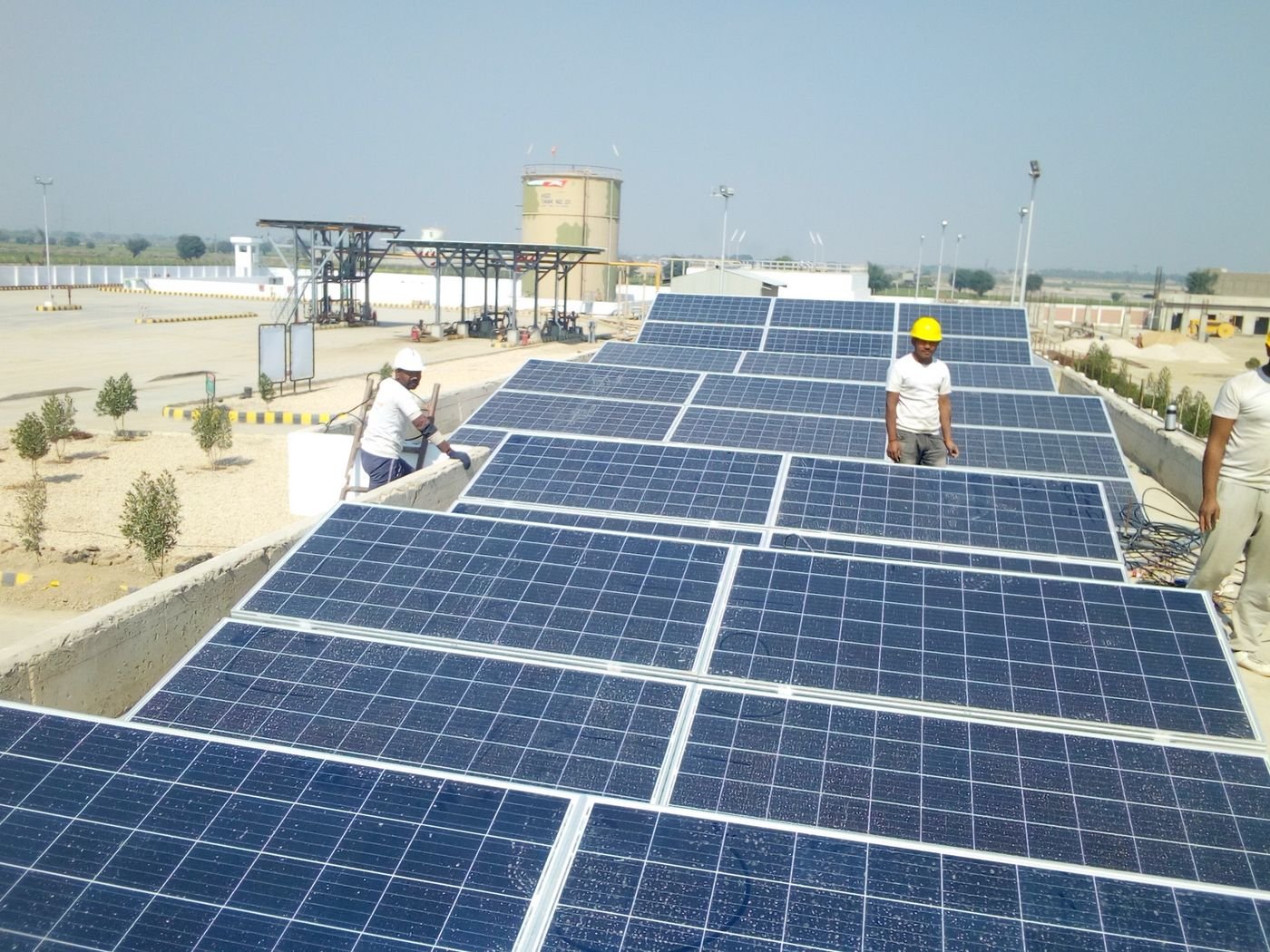
How to apply for solar subsidy in Gujarat, step by step
- Register on pmsuryaghar.gov.in: choose Gujarat, your DISCOM, and enter the consumer number from your bill, your mobile and email.
- Fill the rooftop solar application and choose a registered vendor.
- Feasibility: systems up to 10 kW are treated as approved by default.
- The vendor installs the system. Plant details and geo-tagged photos are uploaded on the portal.
- Apply for the net meter. The DISCOM inspects, fits the net meter and approves the plant on the portal.
- Add your bank details and a cancelled cheque. The subsidy is credited to your account.
Documents you need: latest electricity bill, Aadhaar, bank passbook or cancelled cheque (same name as the bill), roof photo, and property proof if asked.
How long the subsidy takes
| Stage | Typical time |
|---|---|
| Portal registration | Same day |
| Feasibility (up to 10 kW) | Deemed approved |
| Installation | 2–5 days on site |
| Net meter and DISCOM approval | Depends on the DISCOM; usually the longest step |
| Subsidy credit | About 15–30 days after the DISCOM approves the plant |
One of our residential customers (4.36 kW, Adani panels) received the ₹78,000 subsidy in his bank account within 15 days of approval.
Which DISCOM handles your net meter
Check the company name printed on your electricity bill.
| DISCOM | Main areas |
|---|---|
| Torrent Power | Ahmedabad city, Gandhinagar city, Surat city (parts), Dahej, Dholera |
| UGVCL | North Gujarat: Gandhinagar district, Mehsana, Patan, Banaskantha, Sabarkantha, Aravalli |
| MGVCL | Central Gujarat: Vadodara, Anand, Kheda, Panchmahal |
| DGVCL | South Gujarat: Surat (outside Torrent), Navsari, Valsad, Bharuch |
| PGVCL | Saurashtra and Kutch: Rajkot, Jamnagar, Bhavnagar, Junagadh, Kutch |
With net metering, the units your plant exports are set off against the units you import in the same billing cycle. Extra units left over are bought by the DISCOM at a low rate (about ₹2.25 per unit), so size the system to your own use, not to sell power.
Solar subsidy for flats and housing societies
- A society can put solar on the common roof for lifts, pumps and lights, and get ₹18,000 per kW for common areas, up to 500 kW (3 kW per house).
- Flat owners with their own meter can also claim up to ₹78,000 each on their own system.
Example: at Sparsh 32 Society in Kudasan, Gandhinagar, we installed 80 kWp for 25 flats with Adani bifacial panels. Each flat’s bill dropped from about ₹6,000 to nil, and each flat received the ₹78,000 subsidy. See more on our home solar page.
How big a system you need
In Gujarat, 1 kW of rooftop solar makes about 120 units a month on average (roughly 1,450 units a year). A quick way to size your system:
- Look at your average monthly units on the bill (not the rupee amount).
- Divide by 120. That’s roughly the kW you need.
- Check roof space: you need about 80–100 sq ft of shade-free roof per kW.
| Monthly units on your bill | Suggested size | Subsidy |
|---|---|---|
| Up to 150 | 1 kW | ₹30,000 |
| 150 – 300 | 2 kW | ₹60,000 |
| 300 – 400 | 3 kW | ₹78,000 |
| 400 – 600 | 4 – 5 kW | ₹78,000 |
| 600+ | 5 kW and above | ₹78,000 |
Going above 3 kW doesn’t increase the subsidy, but it still makes sense if your bill is high, because every extra unit you make yourself is a unit you don’t buy at your slab rate.
What your vendor must give you
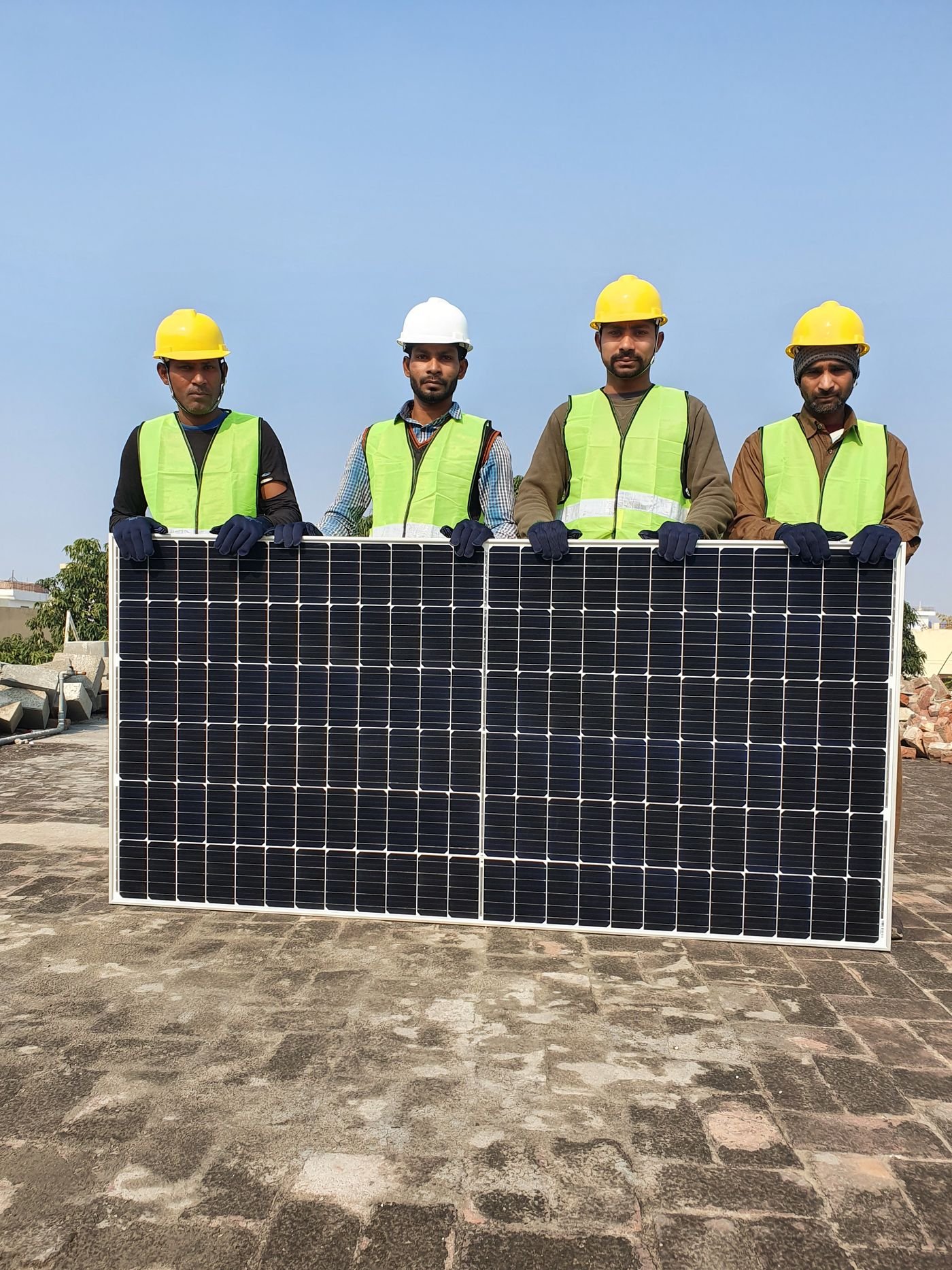
Under PM Surya Ghar, the registered vendor must give you a 5-year maintenance contract and a 5-year warranty on the whole system from the date of commissioning. Panels usually carry a much longer performance warranty from the manufacturer. Ask for both in writing before you pay.
Common reasons subsidy gets delayed or rejected
- A non-DCR panel used anywhere in the system.
- The name on the electricity bill and the bank account don’t match.
- The vendor isn’t registered on the PM Surya Ghar portal.
- Missing or wrong geo-tagged photos.
- Sanctioned load lower than the system size, with no load-change application.
- A subsidy already taken earlier on the same connection.
Solar loans with the subsidy
- PM Surya Ghar: collateral-free loans up to ₹2 lakh at about 7% from public sector banks, for systems up to 3 kW.
- Through ASV: EMI options with Solfin, Ecofy and Ratnaafin.
If you take a loan, the subsidy first goes to the loan account.
GST on rooftop solar
GST on solar panels came down from 12% to 5% from 22 September 2025. A complete installed system works out to about 8.9% overall, because 70% of the value is taxed as goods at 5% and 30% as services at 18%.
ગુજરાતમાં સોલાર સબસિડી (ટૂંકમાં)
PM સૂર્ય ઘર યોજના હેઠળ 1 kW માટે ₹30,000, 2 kW માટે ₹60,000 અને 3 kW કે તેથી વધુ માટે ₹78,000 સબસિડી મળે છે. 2.18 kWp સુધીની સિસ્ટમ માટે ગુજરાત સરકાર વધારાની સબસિડી આપે છે; ગ્રાહકે બેન્ચમાર્ક ખર્ચના માત્ર 10% (SC/ST માટે 5%) ચૂકવવાના રહે છે. અરજી pmsuryaghar.gov.in પર થાય છે અને ભારતમાં બનેલી (DCR) પેનલ ફરજિયાત છે.
Frequently asked questions
How much subsidy will I get on a 3 kW system in Gujarat?
₹78,000 from the Centre under PM Surya Ghar. That is the maximum for any home, even if you install 5 kW or 10 kW.
Is there a separate Gujarat government subsidy in 2026?
Yes. For home systems up to 2.18 kWp, Gujarat pays the balance after the central subsidy and your share. You pay 10% of the benchmark cost (5% for SC/ST): about ₹10,000 for a 2 kW system. The DISCOM credits it to your bank account.
What is the last date for PM Surya Ghar subsidy?
The scheme currently runs till 31 March 2027. An extension has been reported as under consideration, but it hasn’t been notified.
How many days does the subsidy take to come?
Usually about 15 to 30 days after the DISCOM approves your plant on the portal.
Can I get the subsidy with non-DCR panels?
No. Every panel must be DCR (made in India with Indian cells). Even one non-DCR panel makes the system ineligible.
Do flats and housing societies get a subsidy?
Yes. Societies get ₹18,000 per kW for common-area solar, up to 500 kW. Flat owners with separate meters can also claim up to ₹78,000 each.
Is the subsidy available for shops, offices or factories?
No. PM Surya Ghar is only for residential connections. Businesses can claim accelerated depreciation instead. See our guide to industrial solar cost per kW.
What happens to the extra units my plant exports?
They are set off against the units you use in the same billing cycle. Units left over are bought by the DISCOM at a low rate, about ₹2.25 per unit.
Can I get a loan along with the subsidy?
Yes. Collateral-free loans up to ₹2 lakh at about 7% are available for systems up to 3 kW. The subsidy is then credited to the loan account first.
Does the old SURYA Gujarat scheme still work?
No. It is closed for new applications. All new home applications go through pmsuryaghar.gov.in.
Sources
- MNRE, PM Surya Ghar operational guidelines (June 2024)
- PIB, PM Surya Ghar progress note (13 March 2025)
- india.gov.in, PM Surya Ghar: Muft Bijli Yojana
- Government of Gujarat resolution on additional state subsidy (Finance Department approval 24 September 2026); Energetica India, IANS and Gujarat Samachar reports (21–22 October 2026)
- GERC net metering regulations (2016, as amended) and draft DRES regulations (May 2026)
- pv magazine India, GST on solar cut to 5% (September 2025)